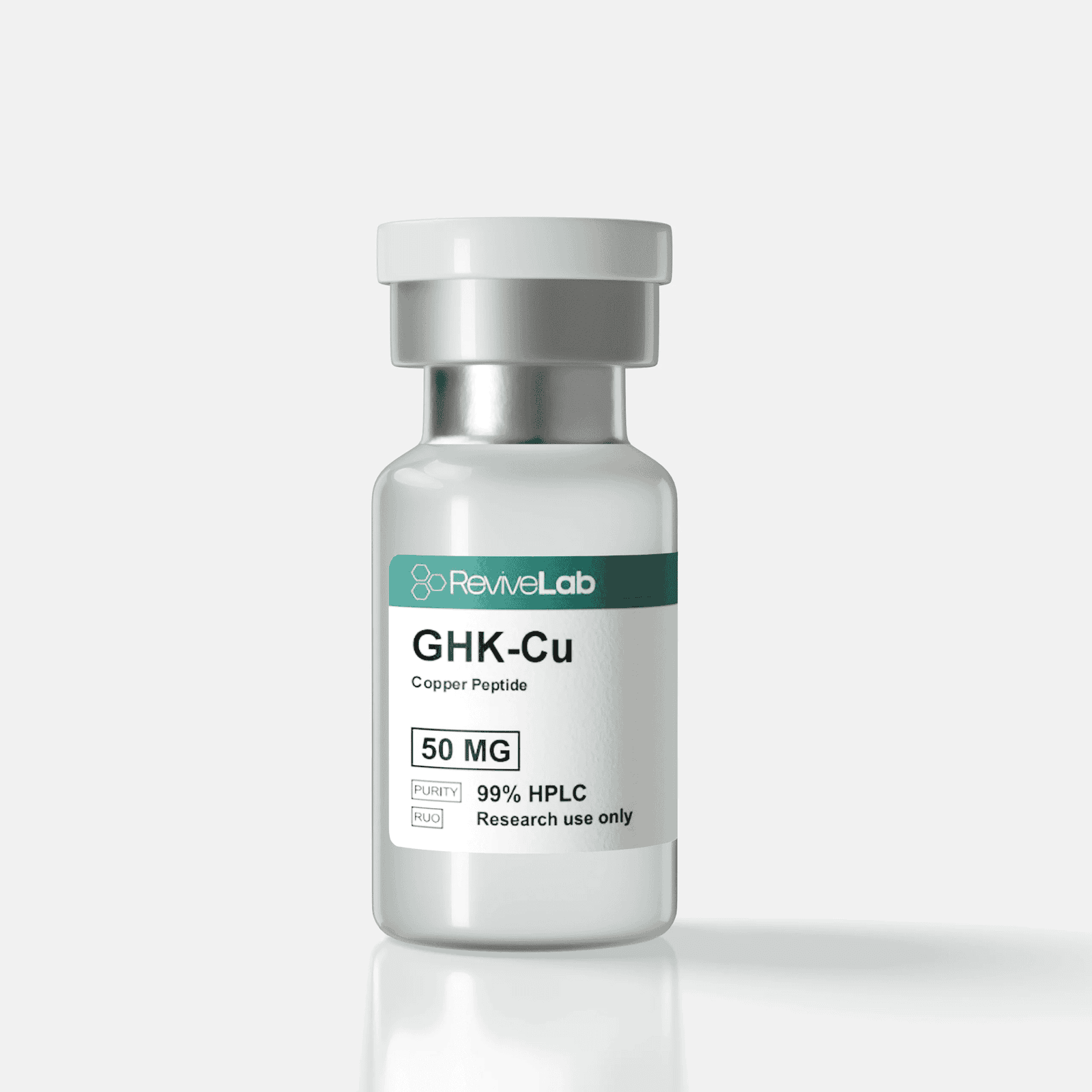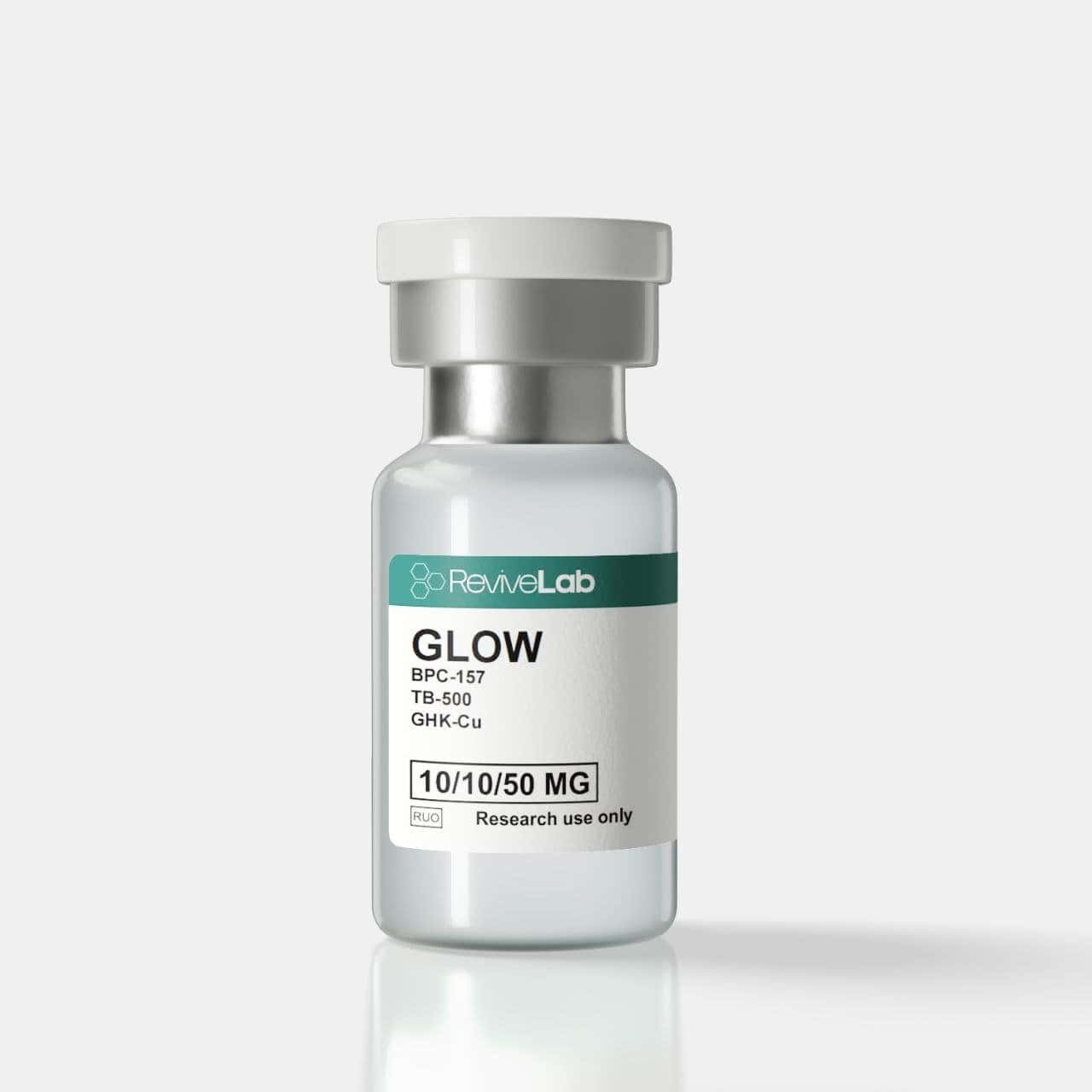
GLOW Blend GHK-Cu (50 mg) · BPC-157 (10 mg) · TB-500 (10 mg)
Advanced Tissue Regeneration & Wound Healing
- GHK-Cu stimulates collagen, elastin, and glycosaminoglycan synthesis for extracellular matrix (ECM) reconstruction.
- BPC-157 accelerates angiogenesis, fibroblast migration, and re-epithelialization in soft tissue and connective tissue injury models.
- TB-500 promotes actin polymerization and cellular motility, allowing rapid cell migration into damaged tissue.
- The combined blend enhances granulation tissue formation, vascularization, and structural repair across skin, muscle, tendon, ligament, corneal, gastric, and bone injury models.
- Demonstrates accelerated wound closure and tissue strength restoration in preclinical research.
Skin Rejuvenation & Cosmetic Regeneration Research
- GHK-Cu improves skin thickness, firmness, elasticity, and barrier integrity in photoaged and mature skin models.
- BPC-157 supports dermal repair by stabilizing microvasculature and reducing inflammatory skin damage.
- TB-500 enhances cellular turnover and cytoskeletal remodeling, supporting smoother skin architecture.
- Reduces fine lines, wrinkles, uneven texture, and hyperpigmentation in cosmetic and dermatologic research.
- Promotes youthful ECM organization and long-term skin resilience.
Hair Growth & Follicle Health
- GHK-Cu expands follicle size, prolongs the anagen (growth) phase, and activates dermal papilla cells.
- BPC-157 improves scalp microcirculation and follicular repair following inflammatory or mechanical stress.
- TB-500 enhances stem cell migration and follicle regeneration signaling.
- Supports reversal of follicle miniaturization and improved hair density in preclinical alopecia and topical research models.
Inflammation Modulation & Immune Balance
- Downregulates pro-inflammatory cytokines including TNF-α, IL-6, and TGF-β across injured and aged tissues.
- BPC-157 stabilizes endothelial and epithelial barriers, limiting inflammatory infiltration.
- GHK-Cu suppresses NF-κB and p38 MAPK signaling pathways.
- TB-500 promotes resolution-phase macrophage activity, reducing chronic inflammation and edema.
- Supports controlled, pro-healing inflammation rather than prolonged tissue damage.
Antioxidant Defense & Cellular Protection
- GHK-Cu scavenges reactive oxygen species (ROS) and increases antioxidant enzyme expression (e.g., superoxide dismutase).
- Chelates pro-oxidant metals such as copper and iron, reducing lipid peroxidation.
- BPC-157 protects mitochondrial integrity and reduces oxidative injury in muscle and connective tissues.
- Shields skin cells, fibroblasts, and DNA from UV-induced damage and environmental stressors.
Gene Expression & Cellular Reprogramming
- GHK-Cu modulates expression of over 30% of human genes related to repair, inflammation, and aging.
- Upregulates genes involved in collagen synthesis, angiogenesis, stem cell activation, and antioxidant defense.
- Downregulates pro-aging and degradative pathways (e.g., MMPs, IL-6, TNF signaling).
- TB-500 and BPC-157 reinforce regenerative gene networks by improving intracellular transport and tissue signaling.
- Drives fibroblasts and epithelial cells toward a youthful, regenerative phenotype.
Cartilage, Tendon & Connective Tissue Support
- BPC-157 enhances tendon-to-bone healing, ligament repair, and joint surface regeneration.
- TB-500 supports cytoskeletal remodeling critical for muscle and connective tissue recovery.
- GHK-Cu increases proteoglycan and collagen synthesis in cartilage models.
- Improves structural integrity of joints, tendons, ligaments, and fascia in preclinical research.
- Demonstrates potential utility in experimental models of connective tissue degeneration and aging.
Anti-Fibrotic Activity & Scar Remodeling
- GHK-Cu inhibits excessive myofibroblast activation, limiting abnormal collagen deposition.
- BPC-157 promotes balanced ECM remodeling and reduces fibrotic tissue formation.
- TB-500 encourages organized tissue regeneration rather than dense scar formation.
- Minimizes hypertrophic scarring in skin and cardiac tissue models.
- Supports regeneration-dominant healing outcomes over fibrosis.