Anxiolytic and Mood-Modulating Effects
Potent Anxiolytic Activity:
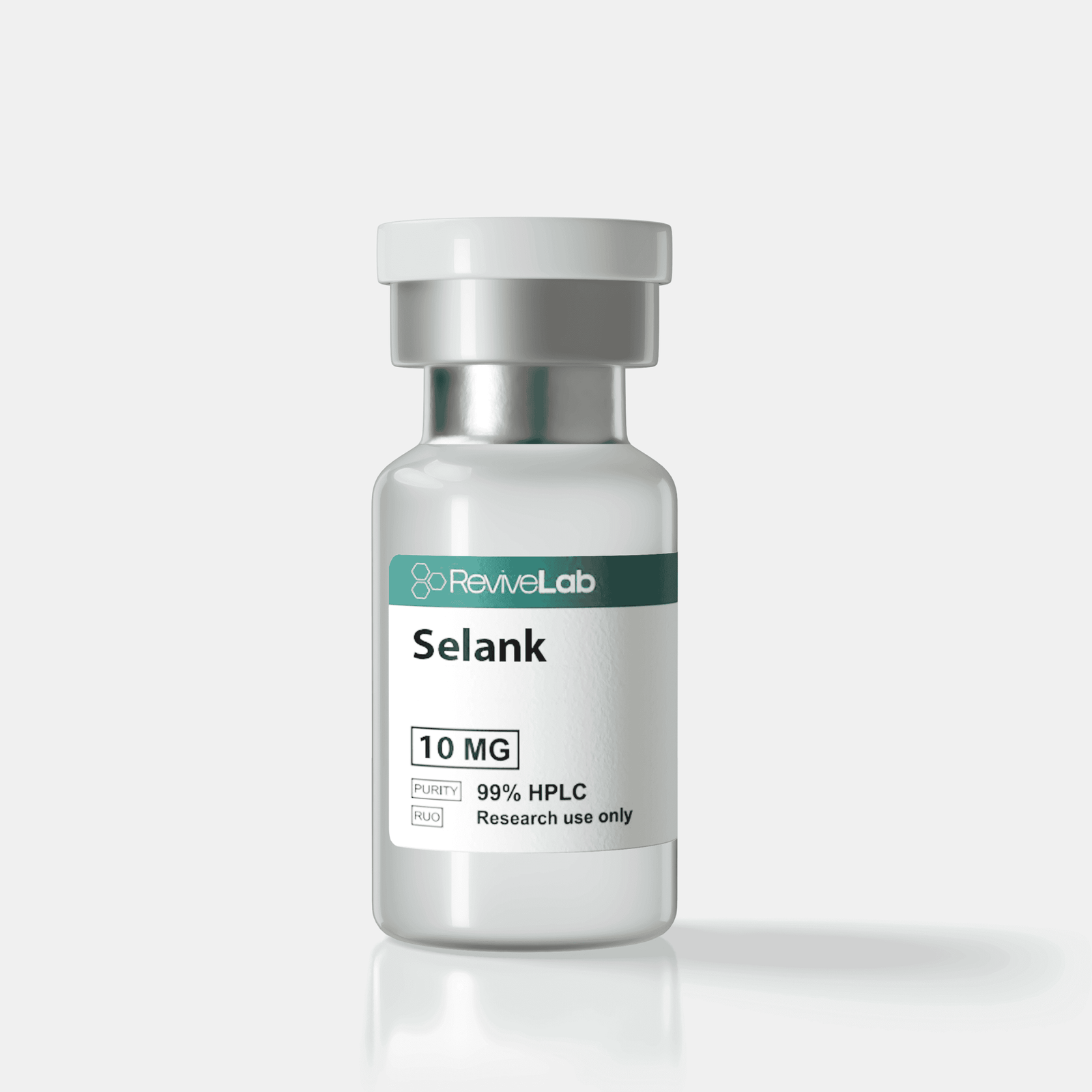
Selank (TP-7) is a synthetic heptapeptide analog of the immunomodulatory fragment tuftsin (Thr-Lys-Pro-Arg), engineered with an added Pro-Gly-Pro sequence for enhanced stability and systemic activity (Ref. 1). Extensive studies in both human and animal models demonstrate pronounced anxiolytic effects comparable to classical tranquilizers, yet without sedation or dependence.
In controlled clinical trials involving patients with generalized anxiety disorder and neurasthenia, TP-7 significantly reduced anxiety severity at levels comparable to medazepam, without producing sedation, cognitive dulling, or withdrawal symptoms (Ref. 2). In animal models, administration of the peptide consistently decreased anxiety-like behaviors in open-field and elevated-plus-maze assessments (Ref. 6). These findings highlight TP-7 as a non-sedating anxiolytic modulator capable of normalizing stress-related behavioral responses.
Anti-Stress & Antidepressant Effects:
This compound demonstrates pronounced anti-stress activity across diverse experimental models. In rodents subjected to acute restraint or chronic social stress, the molecule eliminated fear responses and aggression typically triggered by stress exposure (Ref. 2). Repeated administration produced antidepressant-like effects in a genetic model of depression, reducing immobility without altering locomotion (Ref. 3).
Mechanistically, these effects are attributed to normalization of monoamine levels and modulation of GABAergic and dopaminergic pathways (Ref. 1). The antidepressant-like benefits tend to build cumulatively with ongoing administration, supporting long-term normalization of stress reactivity.
Non-Sedating Profile:
Unlike benzodiazepines, Selank’s calming properties occur without sedation, muscle relaxation, or amnesia (Ref. 6). Experimental subjects maintain normal psychomotor performance even at elevated doses. Long-term studies show no tolerance or dependence after extended exposure (Ref. 2), indicating a favorable safety margin and minimal interference with cognitive or motor function.
Cognitive and Nootropic Effects
Enhancement of Learning and Memory:
Selank displays clear nootropic potential in both animal and human studies. In classical conditioning and passive-avoidance paradigms, the peptide accelerated learning acquisition and improved retention (Ref. 3). Reduced anxiety-related interference likely contributes to improved cognitive processing and consolidation (Ref. 2), allowing Selank-treated groups to perform more efficiently without psychostimulant-like arousal.
Improved Memory Retrieval:
A seven-day course of the molecule enhanced novel-object recognition performance (p < 0.05 vs. control), demonstrating improved memory retrieval under non-stress conditions (Ref. 3). This was accompanied by increased BDNF expression in the hippocampus, a key region for memory encoding and consolidation.
Selank also prevented cognitive impairment in stress-impaired or toxin-exposed models. In animals undergoing alcohol withdrawal, the heptapeptide preserved memory and attention performance (Ref. 3), highlighting its neuroprotective support during periods of neurochemical disruption.
Cognitive Resilience Under Stress:
In models involving chronic restraint stress or alcohol-withdrawal–related deficits, Selank-treated animals maintained normal spatial learning and recognition memory while controls demonstrated marked impairment (Ref. 3). These protective effects suggest stabilization of hippocampal neurochemistry and preservation of stress-related cognitive function.
Neuroprotective and Neurotrophic Effects
Neurotrophin Upregulation:
Selank has been shown to upregulate brain-derived neurotrophic factor (BDNF), a key regulator of synaptic plasticity and neuronal resilience. Intranasal administration in rodents led to rapid increases in hippocampal BDNF mRNA within three hours and elevated protein levels within 24 hours (Ref. 3). This neurotrophic response aligns with the peptide’s nootropic and antidepressant profiles.
Protection Against Neural Damage:
The tuftsin-derived analog protects neural tissue from oxidative and metabolic stress. In aged and alcohol-exposed rodents, it prevented neuronal loss, preserved dendritic architecture, and reduced memory decline (Ref. 3). In chronic-stress models, Selank normalized neuronal morphology and diminished hippocampal neuroinflammation, illustrating utility in neurodegenerative and stress-related research contexts.
Neurotransmitter Homeostasis:
Selank modulates broad neurotransmitter activity across serotonin, dopamine, and norepinephrine pathways in limbic and cortical regions (Ref. 2). Transcriptomic analyses show altered expression of genes encoding GABA_A receptor subunits, dopamine receptors (DRD1A, DRD2, DRD5), and GABA transporters (SLC6A13) (Ref. 1, 9). These adaptations support balanced inhibitory and excitatory neurotransmission.
Anti-Inflammatory and Immune-Modulating Activity
Cytokine Regulation:
Selank’s tuftsin-derived structure contributes to direct immunomodulatory actions. In vitro experiments revealed that nanomolar concentrations suppressed IL-6 overexpression in PBMCs from depressed patients (Ref. 4). Clinical trials in individuals with generalized anxiety disorder reported restoration of the Th1/Th2 cytokine ratio following a two-week regimen (Ref. 4), indicating normalization of immune signaling.
Anti-Inflammatory Gene Expression:
Rodent research shows that this compound shifts expression of genes involved in inflammation, oxidative stress, and immune signaling across the hippocampus and spleen (Ref. 1). These central and peripheral effects contribute to its broader neuroprotective profile.
Antiviral Immune Support:
Experimental studies show the peptide enhances antiviral defenses, improving host resistance to influenza through more coordinated cytokine signaling (Ref. 10), reflecting its immunomodulatory lineage from tuftsin.
Metabolic and Systemic Effects
Metabolic Stability Under Stress:
Preclinical studies indicate that Selank aids metabolic homeostasis during chronic stress. In models resembling stress-induced metabolic syndrome, peptide-treated animals avoided excessive adipose accumulation and maintained energy balance (Ref. 5).
Hemostatic and Blood-Fluidity Effects:
Continuous administration improved blood rheology, enhanced fibrinolytic activity, lowered glucose levels, and activated anticoagulation pathways (Ref. 5). These systemic effects, though less studied, complement the peptide’s neuroactive profile.
Unique Mechanisms of Action
GABAergic Modulation:
Selank acts as a positive allosteric modulator of GABA_A receptors (Ref. 1, 9). It increases GABA affinity and expands the number of available receptor binding sites without altering intrinsic kinetics. Gene-expression overlaps between Selank-induced and GABA-induced transcription (r ≈ 0.86) confirm direct involvement in inhibitory signaling.
Enkephalin Preservation:
The molecule also inhibits breakdown of endogenous opioid peptides such as enkephalins (Ref. 7, 8), prolonging their mood-stabilizing effects and contributing to improved stress resilience.
Tuftsin-Based Structure:
Selank’s backbone, derived from tuftsin (Thr-Lys-Pro-Arg) with an added Pro-Gly-Pro segment for stability and BBB permeability, enables simultaneous modulation of neural and immune pathways (Ref. 2).
Research Applications and Summary
Across neuropsychiatric and neurobiological research, Selank’s profile encompasses:
- Potent anxiolytic and anti-stress action without sedation
• Enhancement of learning, memory, and cognitive resilience
• Upregulation of BDNF and broad neuroprotective effects
• Neurotransmitter regulation across GABAergic and monoaminergic systems
• Immune modulation and cytokine normalization
• Potential antiviral and metabolic benefits
This synthetic heptapeptide represents a multifaceted investigational molecule bridging neural, endocrine, and immune regulation, continuing to attract scientific interest in anxiety, cognitive impairment, and stress-related research.