Melanocortin Pathway Activation
Mimics Natural GHRH:
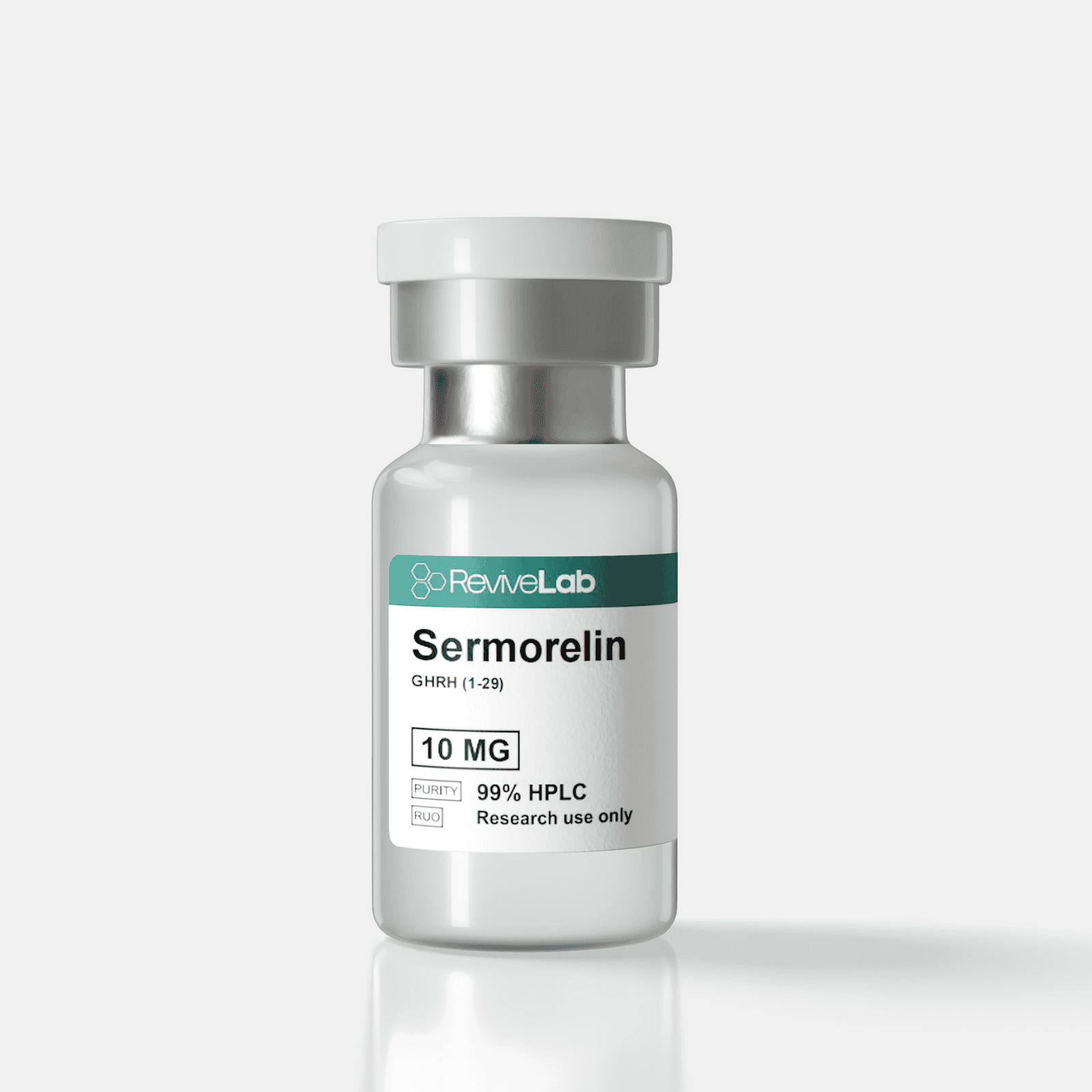
Sermorelin triggers the pituitary to release bursts of GH by the same mechanism as endogenous GHRH. It binds GHRH receptors, activating cAMP signaling in pituitary somatotroph cells, which leads to GH secretion (REF. 1, REF. 6). This natural stimulation means GH is released in a pulsatile, physiologic rhythm rather than as a constant flood. Studies confirm that sermorelin effectively increases 24-hour GH output and restores a more youthful pulse amplitude, especially at night when GH release is naturally highest (REF. 2, REF. 4).
Built-In Safety via Feedback:
Unlike injecting GH directly, using sermorelin allows the body’s normal feedback loops to operate. Elevated GH and IGF-1 from sermorelin will trigger somatostatin (growth hormone–inhibiting hormone) if levels get too high, preventing excessive GH (REF. 1). In other words, overdose of endogenous GH is biologically difficult with sermorelin, making it a safer approach (REF. 1). This negative feedback also ensures that once GH/IGF levels are optimal, additional sermorelin will have diminishing effect – an inherent guardrail against the side effects of too much GH.
Prevents Pituitary Shutdown:
Because sermorelin induces your own pituitary to work, it avoids tachyphylaxis (diminishing response) that can occur with external GH. GH release remains pulsatile and intermittent, preserving normal physiology (REF. 1). In fact, research shows sermorelin can increase pituitary GH mRNA expression and reserve, helping “exercise” the pituitary. This may preserve the aging growth hormone axis, potentially slowing age-related hormonal decline (REF. 1). Rather than replacing GH, sermorelin rehabilitates the body’s ability to produce GH – an important distinction in longevity research (REF. 1).
Key Benefits and Biological Functions of Sermorelin
Significant GH & IGF-1 Elevation:
Sermorelin is proven to substantially boost growth hormone levels and subsequently IGF-1, the liver-produced growth factor responsible for many of GH’s anabolic effects. In an older adult population with low IGF-1, just 14 days of sermorelin (0.5–1 mg twice daily) raised IGF-1 into the youthful range, nearly matching levels of young adults (REF. 2). These IGF-1 increases were dose-dependent and remained above baseline even weeks after stopping treatment, indicating a lasting effect (REF. 2).
Longer protocols show sustained IGF-1 elevation: for example, 16 weeks of nightly sermorelin led to significantly higher IGF-1 and IGF-binding protein-3 levels by week 2, maintained through 3 months (REF. 4). Another trial using a GHRH analog for 20 weeks observed a 117% increase in IGF-1 on average, all within normal physiological limits (REF. 3). This enhancement of the GH/IGF-1 axis underlies many of sermorelin’s downstream benefits on body composition and health.
Increases Lean Muscle Mass and Strength:
By elevating GH/IGF-1, sermorelin creates an anabolic internal environment that promotes development of lean body mass. Clinical studies on older adults have demonstrated measurable gains in muscle tissue from sermorelin therapy. In a 5-month placebo-controlled trial, men gained ~1.3 kg of lean mass on average with nightly sermorelin injections, compared to no change in controls (REF. 4).
Muscle strength and endurance can also improve: a shorter study in healthy seniors found sermorelin significantly increased performance in strength tests (e.g. leg presses and abdominal crunches) despite only 6 weeks of treatment (REF. 6). The muscle-building effects of sermorelin are comparable to those achieved with recombinant GH therapy, but without the loss of physiological GH pulsatility (REF. 6). Importantly, these gains come from stimulating the body’s own growth cascades (GH→IGF-1), which supports muscle protein synthesis and positive nitrogen balance.
Researchers observed that sermorelin-treated subjects shifted toward a positive nitrogen balance, reflecting better protein retention in muscles (an indicator of tissue growth and recovery) (REF. 4). These findings make sermorelin an attractive candidate for combating age-related sarcopenia or muscle wasting conditions (REF. 6).
Enhances Fat Burning and Metabolic Health:
Growth hormone is well-known for its lipolytic (fat-burning) effects, and sermorelin’s stimulation of GH helps reduce adipose tissue while improving metabolism. Although short-term studies of sermorelin alone did not show immediate weight change, longer-duration research demonstrates significant fat reduction. In a 20-week randomized trial, a GHRH analog treatment reduced total body fat by ~7.4% in older adults, a considerable improvement compared to placebo (REF. 3).
This reduction in adiposity was accompanied by increases in lean mass, indicating a favorable recomposition of body tissues. Visceral fat, which is particularly associated with aging and metabolic risk, is expected to decrease as well since growth hormone preferentially targets visceral adipose stores for lipolysis (REF. 6). Alongside fat loss, sermorelin may improve metabolic markers: for instance, insulin sensitivity improved significantly in sermorelin-treated men after 4 months (as measured by glucose tolerance tests), even though fasting glucose/insulin remained normal (REF. 4).
Better insulin sensitivity suggests a lower risk of developing insulin resistance and type II diabetes, aligning with GH’s role in metabolic regulation. Additionally, by inducing IGF-1 within physiological range, sermorelin can support a healthier lipid profile and cardiovascular function (growth hormone deficiency is linked to higher LDL and body fat). While more studies are needed on long-term metabolic outcomes, current evidence indicates sermorelin offers fat-burning and metabolism-supporting benefits similar to those of growth hormone therapy (REF. 3)(REF. 6) – but in a more natural, feedback-regulated manner.
Improved Recovery, Healing, and Tissue Repair:
One of GH/IGF-1’s crucial roles in the body is to stimulate cellular repair, regeneration, and recovery. By raising GH levels, sermorelin can accelerate healing and recovery of tissues. Research in adults has shown sermorelin increases markers of tissue anabolism – for example, the skin thickness of participants increased significantly (by ~7%) after 16 weeks of therapy, in both men and women (REF. 4). Increased skin thickness reflects greater collagen deposition and dermal cell growth, suggesting sermorelin may help rejuvenate skin and connective tissue integrity.
Users and clinicians have anecdotally reported faster wound healing and workout recovery with sermorelin, which aligns with its known effect of boosting protein synthesis and cell proliferation. Indeed, studies found sermorelin-induced GH release led to a positive nitrogen balance (indicating more protein being built than broken down) (REF. 4), creating ideal conditions for tissue repair and muscle recovery following injury or exercise.
Furthermore, growth hormone is important for bone remodeling and joint health – while short trials of sermorelin showed no immediate bone density change (as bone turnover is slower), the overall increase in IGF-1 and lean mass suggests that over longer periods sermorelin could help maintain bone density and joint cartilage (REF. 6). By preserving the GH-IGF axis, sermorelin potentially supports the structural tissues of the body (muscle, bone, skin, tendons), making it of interest in anti-aging and rehabilitative research.
Supports Youthful Sleep Patterns:
Improved sleep quality is a lesser-known but important benefit of sermorelin’s action. Growth hormone release is intimately tied to deep sleep – the largest GH pulses occur during slow-wave (stage 3) sleep. Conversely, diminished GH is associated with poorer sleep architecture in older adults. Sermorelin, by inducing strong GH pulses at night, can enhance slow-wave deep sleep and overall sleep quality.
Studies on GHRH (the hormone that sermorelin mimics) have shown it has marked sleep-promoting effects. In healthy young adults, administration of GHRH significantly increased time spent in slow-wave (deep) sleep and improved sleep continuity (REF. 5). Researchers call GHRH one of the “best documented sleep-promoting” substances, as it directly boosts non-REM deep sleep when present (REF. 5). Sermorelin carries these same benefits – users often report deeper, more restful sleep and better recovery overnight.
By restoring a more youthful GH rhythm at night, sermorelin helps align the body’s hormonal activity with the natural circadian cycle (REF. 5). Note: In very elderly individuals, the sleep improvement from GHRH analogs may be less pronounced (as baseline slow-wave sleep is already greatly reduced), but in middle-aged and research settings sermorelin shows significant promise as a tool to improve sleep quality while also delivering its other regenerative effects. Improved sleep, in turn, amplifies other benefits like muscle recovery, cognitive function, and overall well-being.
Cognitive Function and Neuroprotective Effects:
An exciting area of research is sermorelin’s impact on the brain and cognition. GH and IGF-1 are not only muscle hormones – they act on the brain as well, with receptors in regions like the hippocampus that are crucial for memory. Age-related GH decline has been implicated in cognitive aging and even Alzheimer’s pathology, raising interest in GH secretagogues as potential cognitive enhancers. Early studies found positive correlations between IGF-1 levels and cognitive performance in healthy older adults (those with higher IGF-1 tend to perform better on memory and mental speed tasks) (REF. 6).
Building on that, a randomized controlled trial examined 20 weeks of a GHRH analog (similar to sermorelin) in adults with mild cognitive impairment and healthy seniors. The results showed significant cognitive improvements in the treated group: particularly in executive function (decision-making, attention) with trends toward better memory, compared to placebo (REF. 3). Both the mild impairment group and healthy aging group benefited, suggesting GHRH analogs can enhance brain function even in normal aging (REF. 3).
These cognitive gains are likely mediated by IGF-1’s neurotrophic effects (supporting neuron growth and survival) and possibly by improved sleep architecture (deep sleep is vital for memory consolidation, and GHRH improves deep sleep as noted above). Some scientists have even called for longer trials to explore GHRH (sermorelin) as a therapy for “brain aging” (REF. 3). In addition to memory and executive function, sermorelin research shows mood and wellbeing improvements. After months of treatment, patients reported better overall well-being and increased libido (in men) relative to baseline (REF. 4).
These subjective improvements may result from better sleep, more IGF-1, and possibly slight increases in other pituitary hormones (sermorelin transiently raises FSH/LH, which can support sex hormone levels – see below). All told, sermorelin exhibits promising neuroprotective properties by rejuvenating the GH–IGF axis, making it a fascinating peptide for further research in cognitive health and mood disorders.
Hormonal Synergy (FSH/LH Stimulation):
Interestingly, sermorelin’s action isn’t limited to the GH axis alone – it can cause a spillover stimulation of other pituitary hormones. Studies in children and animal models found that sermorelin injection led to small but notable acute rises in prolactin, follicle-stimulating hormone (FSH), and luteinizing hormone (LH) alongside GH (REF. 6). This is thought to be due to sermorelin’s ability to mildly activate other pituitary cell types or through indirect hypothalamic mechanisms.
The immediate implication is that sermorelin might have ancillary benefits on reproductive hormones: by boosting LH/FSH, sermorelin could encourage higher natural testosterone and estrogen production downstream (REF. 6). In fact, a rodent study confirmed that sermorelin therapy increased testosterone levels in GH-deficient male rats (REF. 6). In humans, the LH/FSH rise from sermorelin is modest and short-lived, but researchers have hypothesized a potential role for sermorelin or GHRH analogs in treating certain forms of hypogonadism (low sex hormone) in men by this mechanism (REF. 6).
More research is needed, but this multi-hormone stimulation highlights sermorelin’s broad pituitary activation and underscores the peptide’s unique ability to revitalize neuroendocrine function in general. Such effects might contribute to the improved vitality, libido, and sense of wellness reported with sermorelin (since those are influenced by sex hormones as well as GH).
Potential Anti-Tumor Properties:
A surprising new area of interest is sermorelin’s effect on cancer cells, particularly in certain tumors that have receptors for GHRH. Recent advanced research analyzed thousands of FDA-approved compounds against glioblastoma (an aggressive brain cancer) and identified sermorelin as a standout candidate. In a 2021 study involving over 1,000 patient samples, sermorelin emerged as the most effective drug for recurrent high-grade gliomas (especially those with certain genetic profiles) (REF. 7).
The scientists found that glioma tumors showed increased GHRH receptor expression, and when sermorelin was applied to glioma cell lines, it inhibited tumor cell proliferation in a dose- and time-dependent manner (REF. 7). The data suggest sermorelin may block the cell cycle in cancer cells, slowing their division (REF. 7). This anti-tumor effect is hypothesized to be via the same pathways that in normal cells lead to growth hormone release – in cancer cells, activation of GHRH receptors might trigger cell-cycle arrest or apoptosis.
While this line of research is very experimental, it opens the door to sermorelin (and GHRH analogs) being investigated as adjunct cancer therapies or targeted treatments for GHRH-receptor-positive tumors. It’s a compelling example of how extensively the actions of sermorelin are being explored – from metabolic enhancement all the way to oncology. These findings are preliminary but underscore that sermorelin’s role in the human body might extend beyond endocrine rejuvenation to affecting pathological growth processes as well.
Excellent Safety and Tolerability:
One of sermorelin’s greatest strengths is its high safety profile observed in studies. As a peptide that amplifies natural hormone release, sermorelin tends to produce fewer side effects than exogenous hormone administration. Clinical evaluations have found sermorelin to be very well tolerated – the most common adverse events are limited to transient injection-site reactions (mild pain, redness) or occasional facial flushing shortly after injection (REF. 8).
In contrast to high-dose GH therapy, sermorelin has not been associated with significant edema, joint pain, insulin resistance, or organ enlargement when used at research doses, because it doesn’t create unphysiologically high GH levels (REF. 6, REF. 8). Importantly, the body’s feedback mechanisms keep things in balance. Long-term studies up to 6 months noted no serious adverse effects; for example, a 5-month trial reported only a temporary rise in one cholesterol marker that normalized later (with no overall negative metabolic effects) (REF. 4).
Another 20-week study in older adults recorded mostly mild side effects (e.g. injection-site itching or slight tingling), with incidence not much higher than placebo (REF. 3). No organ toxicity or significant lab abnormalities have been linked to sermorelin in medical literature. This safety, combined with the difficulty of overdosing due to feedback control, makes sermorelin a safer alternative to direct GH injections (REF. 1). It was even FDA-approved (under the name Geref) in the past for pediatric use, underscoring its favorable risk profile (REF. 8).
In research settings, sermorelin is thus considered a comparatively low-risk peptide, allowing investigators to focus on its potential benefits. As always, further studies are warranted, but current evidence suggests researchers can explore sermorelin’s powerful physiological benefits with a wide margin of safety.
Conclusion:
Sermorelin is a multifaceted research peptide that stimulates the human growth hormone axis in a natural and regulated way. By doing so, it confers numerous benefits: from increasing muscle mass, reducing fat, improving recovery and sleep, to enhancing skin quality, metabolic health, and possibly cognitive function. It essentially aims to recreate a more youthful hormonal environment, which is why it’s of great interest in anti-aging medicine and fitness research.
Moreover, sermorelin’s unique ability to work through the body’s own endocrine system means it avoids many pitfalls of direct hormone therapy, offering a safer profile (REF. 1, REF. 8). All these advantages make sermorelin a compelling candidate for further research in fields such as age-related hormone decline, functional longevity, muscle wasting diseases, metabolic syndrome, and beyond.
The peptide’s emerging roles – including potential uses in combination with other secretagogues for synergistic effects (REF. 6) or even in oncology (REF. 7) – highlight that we are just beginning to unlock all of sermorelin’s functions in the human body.