Cardiovascular & Pulmonary Support
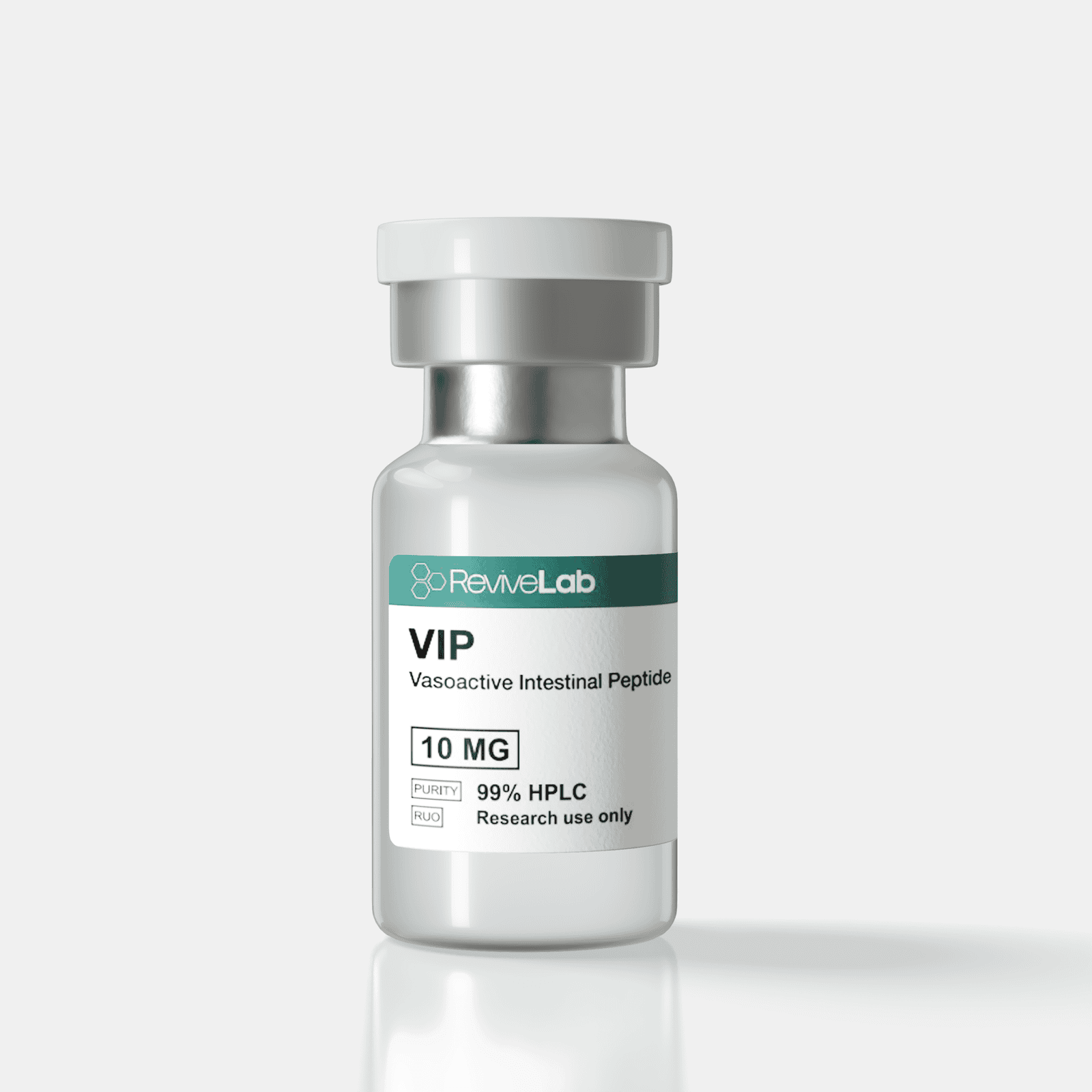
VIP is a potent vasodilator, relaxing blood vessels and increasing blood flow. In the heart, it can dilate coronary arteries and has positive inotropic and chronotropic effects (increasing cardiac contractility and heart rate), which support healthy cardiac output (Ref. 2). In the lungs, VIP acts as a bronchodilator, relaxing airway smooth muscles and improving airflow.
Notably, VIP also has anti-inflammatory effects in the cardiopulmonary system, reducing inflammation in heart and lung tissues (Ref. 2). These combined actions suggest therapeutic potential in conditions like pulmonary hypertension, asthma, and COPD – studies report that VIP-based treatments can lower pulmonary artery pressure, improve oxygenation, and reduce airway inflammation in such disease models (Ref. 2).
Gastrointestinal Function
VIP plays a crucial role in digestive physiology. It regulates smooth muscle activity in the gastrointestinal (GI) tract, causing relaxation of gut smooth muscles (which aids motility and prevents spasms) and stimulates epithelial cell secretion of water and electrolytes (Ref. 3). By increasing intestinal fluid secretion and dilating intestinal blood vessels, VIP helps promote nutrient absorption and protect the mucosal lining (Ref. 3). VIP also inhibits gastric acid secretion via somatostatin release, which safeguards the GI mucosa.
In pathological excess (such as VIP-secreting tumors), these actions lead to profound intestinal fluid loss, demonstrating VIP’s potent effect on GI secretion. Conversely, VIP deficiency is linked to impaired motility and intestinal inflammation, whereas VIP therapy in research models has shown benefits in conditions like inflammatory bowel disease (IBD) by preserving barrier function and reducing gut inflammation (Ref. 3).
Metabolic and Endocrine Effects
VIP has significant effects on metabolic regulation. In the pancreas, VIP stimulates insulin release in a glucose-dependent manner, acting as an insulinotropic agent (Ref. 4). By binding VPAC₂ receptors on pancreatic β-cells, VIP enhances glucose-stimulated insulin secretion without causing hypoglycemia (Ref. 4). It also promotes β-cell proliferation in the pancreas, as shown in cellular studies, suggesting a role in sustaining insulin-producing cell mass (Ref. 4). These properties make VIP and its analogs of interest in type 2 diabetes research for improving blood sugar control.
Beyond the pancreas, VIP influences other endocrine functions – for instance, it can trigger the release of catecholamines from the adrenal medulla as part of the stress response and has been noted to modulate hormone release from the pituitary (such as prolactin and growth hormone) via neuroendocrine signaling pathways (Ref. 4). Overall, VIP serves as a broad-spectrum secretagogue impacting multiple hormonal systems.
Immune Modulation and Anti-Inflammatory Properties
VIP is a powerful immunoregulatory peptide. Immune cells (like T cells, B cells, macrophages, and dendritic cells) not only respond to VIP but can also produce it, indicating a role in immunological crosstalk. VIP generally suppresses pro-inflammatory responses: it inhibits the release of inflammatory cytokines (like TNF-α, IL-6, IL-12) from activated macrophages and dendritic cells, and it shifts T-helper cell responses away from inflammatory Th1/Th17 profiles toward an anti-inflammatory Th2 and Treg profile (Ref. 5).
This means VIP promotes the generation of regulatory T cells and “tolerogenic” dendritic cells that help resolve inflammation (Ref. 5). In various autoimmune disease models, VIP has shown protective effects – for example, VIP treatment in mice with rheumatoid arthritis or multiple sclerosis models reduces disease severity, delays onset, and increases regulatory T cell numbers, thereby ameliorating joint or neural inflammation (Ref. 5).
Similarly, VIP analogs have been reported to prevent chemically induced colitis by downmodulating the immune attack on the gut. Because of these broad immunomodulatory actions, researchers are exploring VIP-based therapies for conditions such as autoimmune arthritis, inflammatory bowel disease, septic shock, and other inflammatory disorders. VIP is even termed a “gatekeeper” of immune homeostasis in certain immune-privileged sites (like the brain and eye) where it helps prevent excessive inflammation (Ref. 5).
Neurological and Cognitive Effects
In the central nervous system, VIP is highly expressed in areas like the cortex, hippocampus, and suprachiasmatic nucleus, and it influences several brain functions. VIP is perhaps best known in neurobiology for its role in the circadian rhythm – it is crucial for synchronizing the body’s internal clock. Neurons in the suprachiasmatic nucleus (the brain’s master clock) release VIP to coordinate daily cycles; mice lacking VIP or its receptor show disrupted circadian rhythms, underscoring that VIP is essential for normal day-night physiological cycles (Ref. 6).
VIP also affects cognitive function: it has been implicated in facilitating learning and memory. Studies indicate that VIP signaling in the hippocampus can modulate synaptic plasticity, the neural basis of memory (Ref. 6). Moreover, VIP has links to mood and behavior – for example, it influences pathways related to anxiety and depression. Research has found that higher VIP levels correlate with lower anxiety symptoms and healthier emotional processing in humans, suggesting an anxiolytic (anxiety-reducing) role (Ref. 6).
Additionally, VIP is released in response to stress and brain injury; it appears to exhibit neuroprotective effects, helping neurons survive injury or oxidative stress. Overall, VIP serves as a neuropeptide that not only coordinates circadian timing but also supports cognitive health and emotional balance.
Neurodegenerative Disease Protection
Beyond its general cognitive roles, VIP has shown promise in the context of neurodegenerative diseases. It is being investigated for Alzheimer’s disease (AD) and other dementia-related conditions due to its neuroprotective and anti-inflammatory actions in the brain. Notably, VIP can reduce toxic protein accumulation in AD models – a 2019 study in an Alzheimer’s mouse model (5xFAD mice) demonstrated that chronic VIP administration significantly decreased β-amyloid plaque deposition in the brain and prevented neural atrophy (Ref. 7).
VIP-treated AD mice performed better and retained more brain tissue volume compared to untreated controls (Ref. 7). These findings suggest that VIP helps preserve neurons by both direct neurotrophic effects and by modulating glial cells (e.g., encouraging microglia to clear amyloid and reducing pro-inflammatory glial activation). Other studies have similarly reported that VIP can promote clearance of misfolded proteins and improve cognitive outcomes in animal models of neurodegeneration.
Furthermore, given VIP’s role in enhancing neurogenesis and synaptic plasticity, there is interest in its therapeutic potential for Parkinson’s disease, Huntington’s, and amyotrophic lateral sclerosis (ALS) as well. While research is ongoing, VIP-based compounds could emerge as novel neuroprotective agents to slow neurodegenerative processes (Ref. 7).
Cancer-Related Effects
VIP and its receptors (VPAC₁/VPAC₂) are increasingly recognized in the context of cancer biology. Interestingly, many tumor cells overexpress VIP receptors, and VIP can influence tumor growth in complex ways. In some cancers (such as colon, pancreatic, breast, prostate, and certain neuroendocrine tumors), VIP acts as a growth factor, stimulating cell proliferation and angiogenesis via its signaling pathways (which often activate cAMP and pro-survival signals).
In other contexts, VIP might induce differentiation or even inhibit growth of specific tumor types – the effect can vary by cancer and receptor expression pattern (Ref. 8). This duality is an active area of research. Importantly, the abundance of VIP receptors on tumors has opened up new avenues for cancer diagnosis and therapy. Scientists have developed radiolabeled VIP analogues as imaging agents: these molecules bind to VIP receptors on tumors, allowing PET/CT scans to visualize VIP receptor–positive cancers (including gastrointestinal adenocarcinomas, neuroblastomas, and others) (Ref. 8).
Clinical studies have shown successful imaging of VIP-rich tumors using such techniques (Ref. 8). On the therapeutic front, researchers are experimenting with VIP-based drug delivery – for example, attaching cytotoxic drugs or radionuclides to VIP analogs to selectively target and kill VIP-receptor expressing tumor cells (Ref. 8). Early results are encouraging in models of breast and pancreatic cancer, where VIP-targeted therapies have inhibited tumor growth.
Additionally, because VIP can modulate immune activity, there is interest in blocking VIP signaling to enhance anti-tumor immunity (some tumors may exploit VIP’s immunosuppressive effect to evade the immune system). Indeed, a recent study in pancreatic cancer models found that antagonizing VIP receptors can boost immune attack on tumors and slow cancer progression (Ref. 8). In summary, VIP is a “double-edged sword” in oncology – it can promote tumor growth in certain environments, but it also presents a useful target for tumor imaging and targeted treatment. Ongoing trials are investigating VIP analogs for safely delivering therapy to VIP-receptor–rich malignancies.
Reproductive and Sexual Function
VIP is abundantly present in the reproductive system, including the genital tissues, and it plays a notable role in sexual function. As a vasodilator and smooth muscle relaxant, VIP contributes to the blood flow changes necessary for sexual arousal. In males, VIP is a key neurotransmitter mediating penile erection – it causes dilation of penile blood vessels and relaxation of cavernosal smooth muscle, leading to increased blood engorgement in erectile tissue (Ref. 9).
In fact, studies have shown that injecting VIP directly into the corpus cavernosum can induce strong erections. VIP by itself or in combination with other vasodilators has been tested as a treatment for erectile dysfunction (ED): in clinical trials, an injectable mix of VIP and phentolamine produced an erection sufficient for intercourse in ~84% of men with non-psychogenic ED, versus ~12% with placebo, demonstrating VIP’s efficacy in ED therapy (Ref. 9). VIP nerves in the penis are found to be reduced in men with diabetes or other causes of impotence, further indicating VIP’s importance in normal erectile physiology.
Due to minimal side effects (the main one reported was transient facial flushing due to systemic vasodilation), VIP-based ED treatments (e.g. VIP injection or VIP analogues) have been well-tolerated and are used in certain patients refractory to standard medications (Ref. 9). In females, while less studied, VIP is known to increase blood flow to the genital area and may facilitate vaginal lubrication and clitoral engorgement.
Additionally, VIP is involved in reproductive processes such as implantation and placenta function (it is produced in the uterus and placenta, and may help modulate uterine blood flow and immune environment for pregnancy). These diverse roles make VIP of interest not only in treating sexual dysfunction but also in researching fertility and reproductive health (Ref. 9).